TOKYO STORIES is bringing 26 AI short films to the Tokyo Photographic Art Museum on November 5, 2026. The showcase is part of Short Shorts Film Festival & Asia’s autumn programme, with two sessions scheduled for 12:30–14:00 and 14:20–15:50, Japan time.
TYO announced the screenings on October 30, following the second collection’s announcement on October 8. Admission is free with advance reservation. The festival programme has the venue and booking details.
The useful idea for AI-video creators is the shared brief: one city, interpreted by different filmmakers. A defined subject gives a collection coherence while leaving room for individual visual choices.
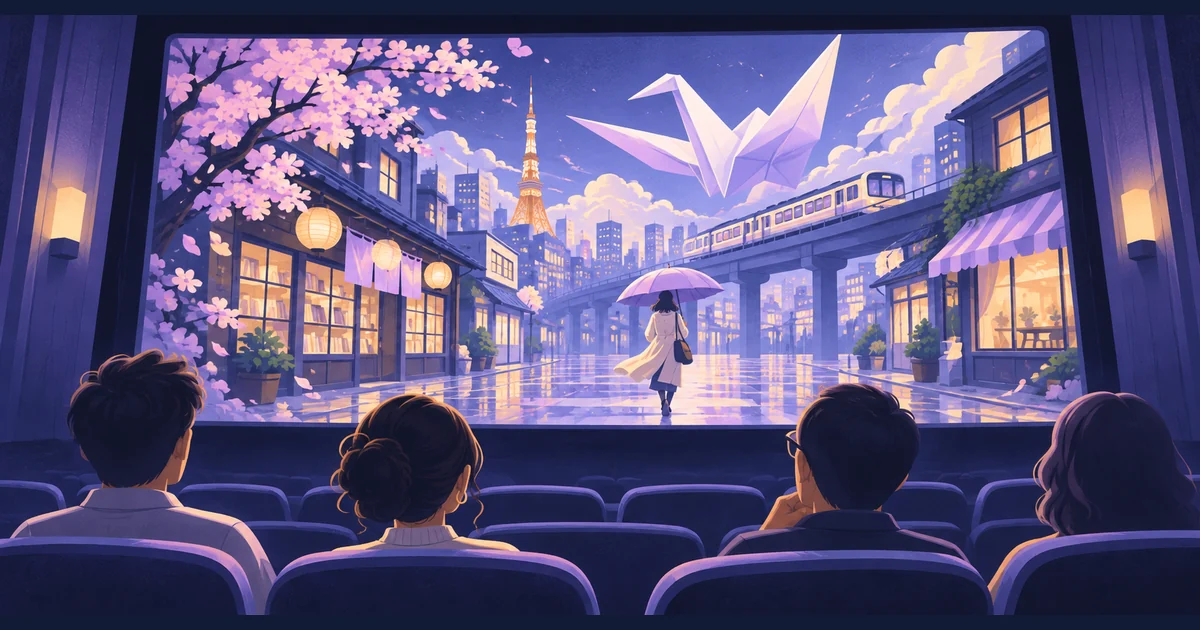
Header: original editorial illustration of an imagined cinema screening.
A common subject, different creative decisions
TYO’s project brings creators from advertising, film, art and other disciplines together around Tokyo. The November programme includes work by Jun Tamukai, SAEKO EHARA, Chihei Tanaka and BANTAIZ. TYO describes the project as an exploration of new forms of expression through generative AI.
For us, that framing is more useful than starting with a model’s most spectacular effect. “Make a cinematic AI video” leaves the subject, perspective and sequence almost entirely open. A place-based brief immediately gives you decisions to make: whose experience are we following, what belongs in this world, and what changes over the film?
The constraint can be smaller than a city. A last bus, a closing flower shop or one apartment window can supply a setting with a clear point of view. Choose a detail that can develop across shots instead of collecting unrelated images that share a colour palette.
Turn inspiration into a sequence
Try an original three-shot exercise: someone waits, something unexpected interrupts the wait, and the final shot reveals their response. Decide the action before selecting visual references or generating clips.
In Tellers, you can direct that workflow by prompting:
Help me plan a 20-second fictional short at an empty bus stop.
A passenger waits, a paper bird lands beside them, and they fold
their unused ticket into a second bird.

First propose three storyboard images with the same passenger,
costume and location. Keep the action readable without dialogue.
Wait for my approval before generating the video shots.
Use the storyboard to decide whether each shot contributes something the previous one did not. If the ending is unclear in three stills, more elaborate camera movement is unlikely to solve it.
Once the images work, ask our agent to generate the shots using the approved references, then assemble them on the Tellers timeline. You can revise by prompting: “Shorten the wait, hold the passenger’s reaction, and carry the street ambience across the cuts.” Our reference-guided video guide explains how visual references help carry a direction between generations.
Where to explore the project
TYO publishes films through the official TOKYO STORIES YouTube channel. When watching, look for the decision that holds each film together: a recurring subject, a sound, a spatial rule or a change in the character’s behaviour.
Bring that kind of specific intention to your next Tellers project. The transferable lesson is to give the film a point of view before asking a model to fill the frame.
Frequently asked questions
Where can I watch the TOKYO STORIES AI short films?
Explore the films on the official TOKYO STORIES YouTube channel. TYO’s announcements and the festival programme linked above provide details of the November 5, 2026 cinema screenings.
What connects the films in TOKYO STORIES?
Tokyo is the shared subject. Different filmmakers interpret the city through their own perspectives and visual choices. For your own short film, a similarly specific place or situation can give the sequence a clear direction without prescribing every shot.
How can I start making my own AI short film?
Start with a simple action that develops across a few shots. In Tellers, ask our agent to create a static storyboard first. Once you approve it, prompt the agent to generate the shots, assemble them on the editable timeline and refine the pacing and sound.