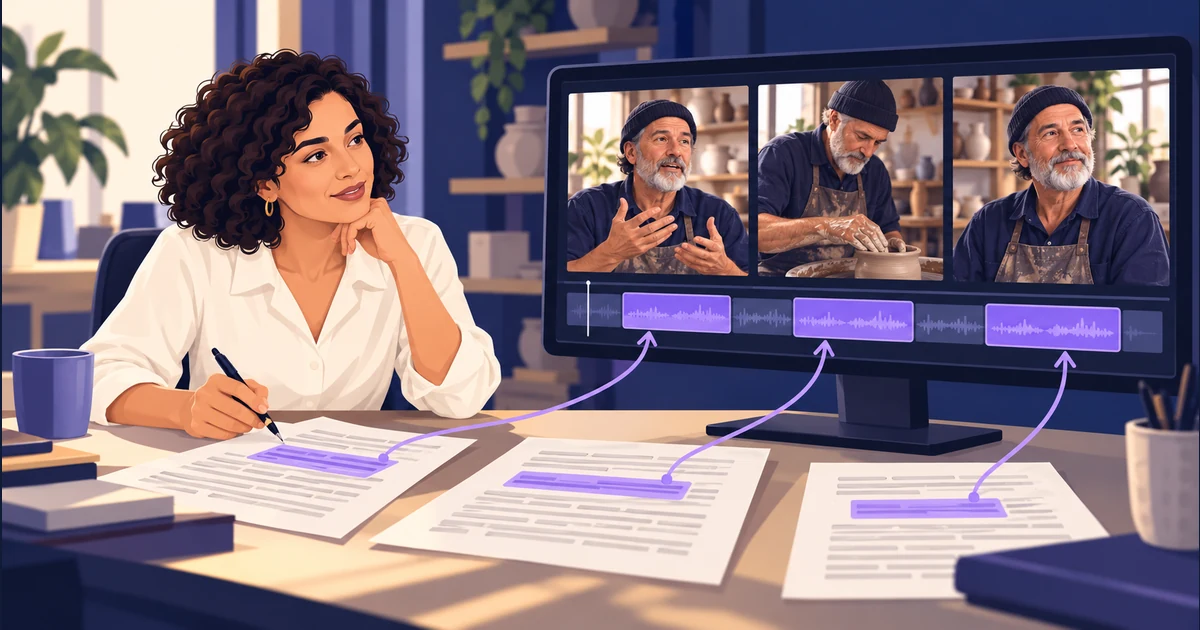
To create an interview rough cut with AI, first choose the passages that tell the story, then assemble those passages from the original recordings. A useful first cut makes the argument understandable before you spend time on titles, music or colour.
A transcript helps you find the material. The recording tells you how it actually lands: hesitation, emphasis and a revealing pause may matter as much as the words. Treat the transcript as a map back to the footage, not a substitute for watching it.
Give the edit a question to answer
Imagine a 40-minute interview with a ceramicist about opening a first studio. “Make this shorter” leaves almost every editorial decision unresolved. “Make a three-minute story about why she left her old job, what went wrong with the first kiln firing, and why she continued” gives the editing agent a direction.
Write one sentence identifying the viewer and the question the film should answer. Then identify the passages you must retain and anything outside the brief. For a profile, that might mean keeping a difficult decision and its consequence while dropping the detailed equipment discussion.
The target duration is a working constraint. If the explanation needs another sentence to make sense, keep it in the first cut and decide what else to remove later.
Ask for a paper edit before the timeline
A paper edit is a proposed sequence of source excerpts. It lets you review the structure without polishing a video you may later reorganise.
Upload the recordings with clear filenames, plus any separate microphone audio and approved speaker names. In Tellers, the agent can generate a transcript and read it back. Ask it to preserve the link between each selected passage and its source:
Review these interview recordings for a three-minute profile about
why the ceramicist opened her studio and kept going after a setback.

Before editing, propose a paper edit with:
- source filename and start/end timestamps for each passage;
- the actual spoken words, not rewritten dialogue;
- the role of each passage in the story;
- any missing context or uncertain transcription.

Suggest an opening, a turning point and an ending. Keep qualifications
attached to claims. Do not combine fragments into a new statement.
Wait for my choice of structure before assembling the timeline.
Keep the first proposal small enough to assess. You want a possible film, not a catalogue of every interesting sentence. If two passages do the same job, ask the agent to explain the difference and recommend one.
Listen to the selected passages in context
Read the proposal, then play the source around each selection. An answer beginning “yes, that changed everything” needs the question or another line of setup. A confident sentence on paper may be a joke in the recording.
Check names, numbers and negatives particularly carefully. Preserve phrases such as “at first” or “for that project” when they limit what the speaker is saying. Reordering answers can clarify a story, but should not imply that one event caused another when the interview never established that connection.
Leave a little room around the proposed cut points. Exact dialogue trims belong in the listening pass, where breaths and consonants are audible.
Turn the approved structure into an editable rough cut
Tellers is AI for video editing: provide the footage and describe the finished video. Once the structure is approved, ask the agent to build it from the original speech:
Assemble the approved paper edit into a separate editable timeline.
Use the original recorded voice. Keep natural pauses and complete words.
Preserve source references so I can check each selection.

Start with the interview picture and clean dialogue. Add only supplied
B-roll that clarifies a specific passage. Leave music and decorative
effects for later. Flag jumps that need a better cut or covering shot.
Show the playable rough cut and its total duration.
Watch the whole sequence before making local corrections. Does the opening establish the person and problem? Does each answer move the story forward? Does the ending resolve the question you started with? A technically smooth edit can still repeat itself or omit the most important explanation.
Give revisions by purpose: “move the failed firing before the decision to continue” is more useful than “make it punchier.” This is vibe editing grounded in a specific editorial intention.
Polish only after the story holds together
Once the sequence works, tighten repeated ideas, cover distracting picture jumps and add captions. Use B-roll to show the thing being discussed, not simply to hide every visible cut. Save music and visual treatment for the version whose structure you intend to keep.
For recurring profiles, save the approved brief and review rules as a starting point for agentic editing. Reuse the format, while letting each subject’s actual story determine the selections.
If the goal is a sales testimonial rather than a profile, our customer-testimonial guide covers that specific structure. Otherwise, open Tellers and start with the question your film needs to answer.