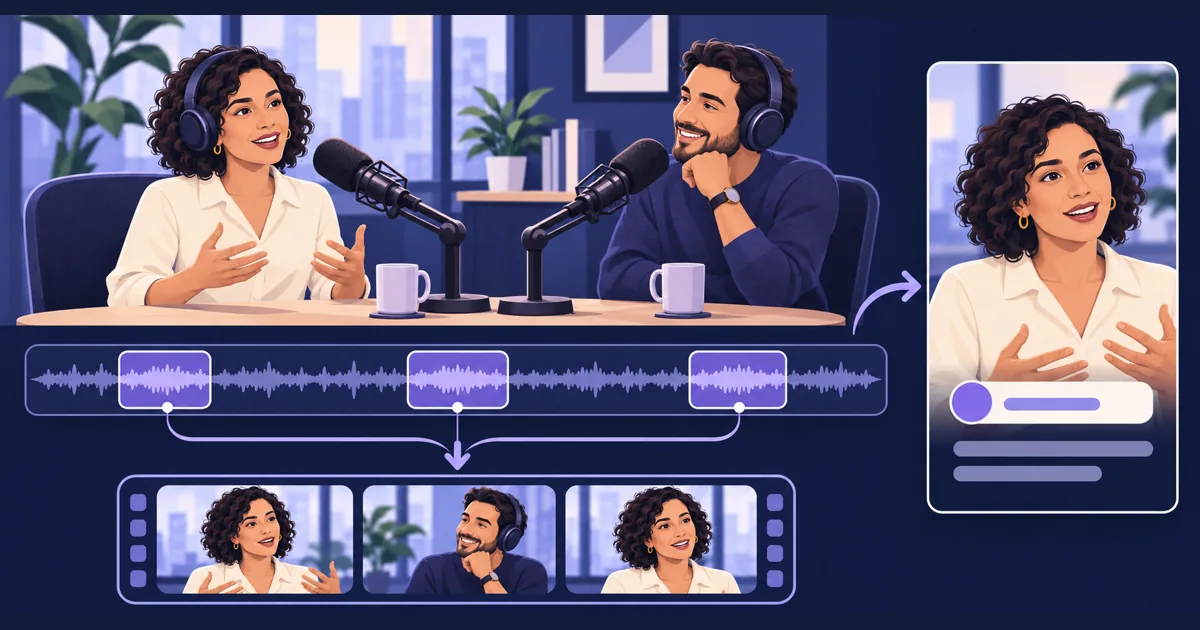
To create a podcast episode teaser with AI, choose one reason to watch the episode, find a few passages that demonstrate it, and ask the agent to assemble those excerpts into a short preview. A teaser should give viewers enough substance to care about the conversation, with a clear route to the full episode.
This guide focuses on promoting one recorded episode. A trailer introducing an entire show has a different job: explaining its premise, hosts and recurring appeal. Apple’s podcast trailer guidance distinguishes these formats and recommends giving listeners a clear next step.
Choose the promise before the quotes
Imagine an episode with a baker about opening a neighbourhood shop. The recording covers equipment, hiring and a difficult first month. A teaser trying to include all three will feel like a table of contents. Pick a question instead: what did the baker misunderstand about opening day?
Write a one-sentence promise for the viewer: “Hear what changed when the first customers arrived.” Then look for a surprising observation, a concrete detail and a reason to continue listening. These can come from one exchange; you do not need three separate dramatic moments.
Choose a destination at the same time. “Watch the full conversation” works only if the post or page gives the viewer somewhere to go. Have the episode title, guest name and release information ready before you make the end card.
Ask the agent for a small selection
Upload the video episode and any separate audio you intend to use. In Tellers, our transcription and editing tools let you move from finding passages to assembling the teaser in the same conversation.
Find three possible openings for a 30–45-second teaser of this episode.
The audience is people considering opening their first small shop.
Focus on what surprised the baker when the first customers arrived.

For each opening, provide the original words, source timestamps,
and the follow-up passage that gives it enough context.
Explain the reason to watch the full episode in one sentence.
Do not rewrite the guest's speech or invent a more dramatic claim.
Wait for my choice before building the teaser.
Listen to each candidate with the surrounding conversation. A line that reads strongly may sound hesitant, sarcastic or dependent on an earlier question. Keep the phrase that explains what “it” or “that day” refers to. If the hook needs a long explanation to be understood, choose another.
Build one short progression
Use a simple working structure rather than a fixed montage template:
| Part | Editorial job |
|---|---|
| Opening | State the surprising observation or useful question. |
| Development | Show a specific detail from the experience. |
| Invitation | Name the episode and give the viewer a next step. |
Let the selected speech determine the cut lengths. A reaction shot can help an exchange breathe, but do not relocate a reaction to suggest agreement or surprise that never occurred.
Build a separate vertical teaser from the opening I selected and
its approved follow-up. Keep the original speech and natural pacing.
Aim for 30–45 seconds, including an end card with the supplied
show name, guest name and full-episode destination.

Use the episode footage. Keep the active speaker readable in the crop.
Add accurate captions, checking names against my supplied spelling.
Do not add music yet. Show me the playable timeline for review.
This is vibe editing with a specific brief: you direct the promise and review the result while our agent performs the edit. You can revise it by prompting, for example: “Keep the opening, remove the repeated setup, and give the final sentence more room.”
Review the teaser on its own
Play it without relying on your knowledge of the episode. Can a new viewer identify the subject and understand why the guest’s experience matters? Does the ending offer more of the conversation rather than withhold a crucial qualification?
Check the vertical frame for cropped mouths, distracting empty space and captions covering faces. Watch with sound off to assess caption clarity, then listen without looking to hear abrupt trims or uneven levels. Add a restrained music bed only if it suits the show and leaves every word clear.
For a regular series, keep the approved brief and replace the episode-specific promise each week. Our agentic editing guide explains how reusable editorial rules support repeatable work. Start your teaser in Tellers with a small selection of openings, then build the one that earns your attention.
Frequently asked questions
How long should a podcast episode teaser be?
Start with a 30–45-second brief for a social preview, then adjust to fit the idea. A complete, understandable exchange matters more than hitting an arbitrary duration.
Can I combine excerpts from different parts of the episode?
Yes, if their meaning survives the rearrangement. Keep qualifications attached to claims and do not make an answer appear to respond to a question it was never answering.