Sand.ai launched its flagship MAGI-2 video model on November 24, 2026. The announcement describes clips up to 30 seconds at 1080p and 25 fps with generated sound, plus inputs for image, video and audio references. The practical question is what job you want each reference to do.
This is the 480-billion-parameter version, distinct from the smaller August preview. The 1080p output uses an upscaling stage. Sand.ai says it plans to release the full model weights and a technical report; the model already available through its Hugging Face account is the earlier preview.
An audio reference and a soundtrack serve different purposes
Sand.ai documents up to 20 media inputs for a native request: ten images, five videos and five audio clips. That’s room to show the model several views of a subject, demonstrate a movement and provide a sound reference together. The launch showcase includes a sequence guided by references for the character, clothes and several locations. It shows what the team achieved with those inputs; it doesn’t establish that every cut or sound cue lands at an exact time.
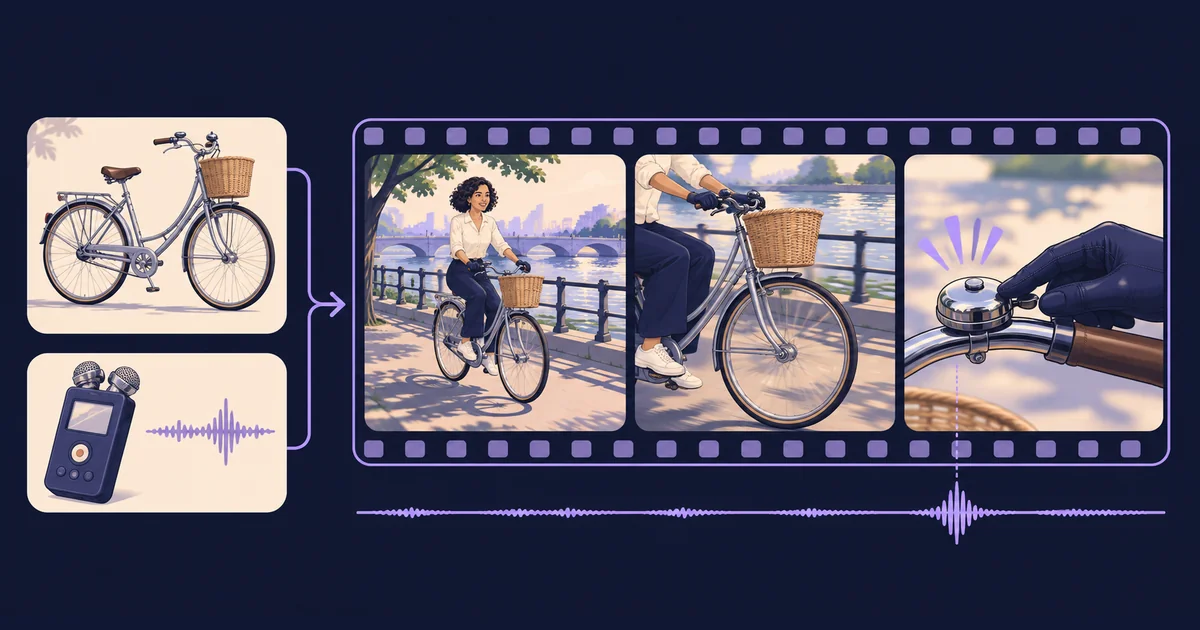
Think of a shot of a bicycle coasting past the camera. A photo shows its silver frame and front basket. A clip shows how slowly it should enter. A recording of a bell captures the sound you want at the moment the rider passes. That’s three separate instructions. If the recording is the actual sound you need to hear, keep it on a separate audio track and line it up with the picture. Giving a model a sound to imitate doesn’t establish that it will preserve that recording unchanged.
Decide what needs to be exact before you generate
For a shot that cuts against real footage, choose the reference for the object that must match and describe motion and sound separately. Keep the request small enough that you can see what failed. “Hold the basket and frame design, roll left to right, ring the bell as the front wheel reaches the foreground” gives the clip a concrete action to judge.
In Tellers, P-Video-2-Pro-Reference offers a choice relevant to this workflow. You can ask it to use sound as a reference or turn on its soundtrack option to keep a supplied audio file and generate picture against it. For an exact editorial cue, keep the bell on the timeline and place it at the frame you approve. Start a shot in Tellers with your strongest visual reference and a clear decision about which sound needs to survive.
Frequently asked questions
Can MAGI-2 generate video and audio together?
Yes. Sand.ai describes synchronized video and audio generation in one model, including dialogue, sound effects, ambience and music. It lists output up to 30 seconds at 1080p and 25 frames per second.
Are the full MAGI-2 weights available to download?
Sand.ai announced that it plans to release the flagship weights. Its downloadable MAGI-2 Preview is a separate, smaller model from August 2026.