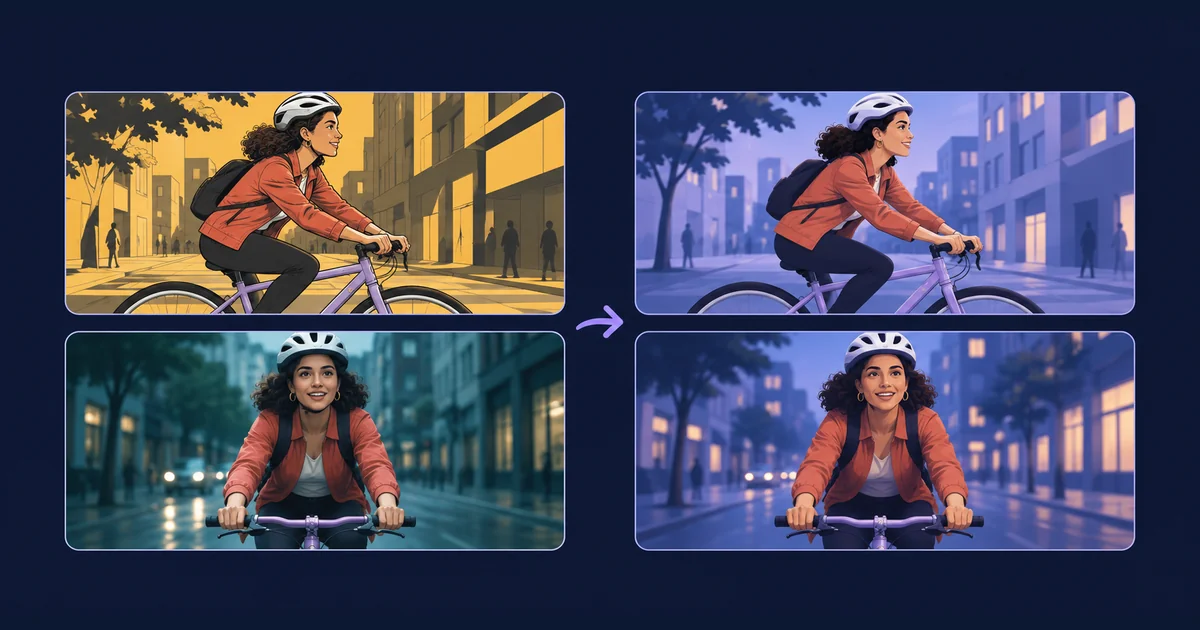
A storyboard can have just the right angle in a sketch and just the right lighting in a photo. Feed both to a video model and you may get one shot that looks illustrated and another that looks like live action. Each shot can work on its own while the cut between them feels like it belongs in a different film.
The Refrain preprint, submitted to arXiv on November 20, 2026, tackles that problem. Hongru Yan and colleagues present a model that generates several shots together, with image and video references placed on a shared timeline and a text prompt describing the overall look.
How Refrain learns which differences to ignore
The team starts with a real sequence, makes different visual changes to the reference clips and trains the model to reconstruct the original. One reference might get a lighting change while another gets a new surface texture. The original serves as an example of how those shots can belong together without inheriting every change made to the references. At generation time, the references can cover only part of a shot; they don’t all have to be the same length as the shots they guide.
The paper also proposes a way to score style consistency without treating an intentional scene change as a mistake. A cut from a cyclist to a close-up of the wheel should change what is in the frame. The metric estimates how much style variation normally accompanies a change in content, then looks for drift beyond that. The authors report that training on independently altered references improved consistency on their tests with conflicting references.
The results mainly cover short sequences. The paper also identifies a limitation that’s familiar when you write a brief: a shared style prompt doesn’t give you explicit control over every detail you want to keep or change. Consistent lighting can still come with the wrong jacket.
Give each reference one clear job
For a two-shot cycling promo, you might have a rough pencil drawing for the wide shot and a bright midday photo showing the correct bike. If the campaign takes place at dusk, say which parts of the references are useful before generating either shot:
Use the sketch for the side-on framing of shot one. Use the bike photo for the lavender frame and silver rack. Both shots take place on the same street at blue hour. Cut from the rider passing a shopfront to a tight view of the rear wheel in motion. Keep the jacket coral in both shots.
In Tellers, choose the appropriate input roles with our guide to reference images and keyframes, then assemble the selected takes with our editing agent. Watch the cut before polishing either shot. If the bike frame changes shape, revise or replace that take. If the bike matches and only the colours feel out of place, compare the grades before spending another generation.
Start a sequence in Tellers with two shots that need to work together. It’s easier to settle the look where they meet before you generate the rest.
Frequently asked questions
What is Refrain in AI video generation?
Refrain is a research model designed to generate a sequence of shots with a shared visual style even when the reference images or clips look different. It maps references to sections of a shared timeline and generates the sequence jointly.
Is style consistency the same as character consistency?
No. A sequence can keep the same colour, lighting and texture while changing a character’s face or wardrobe. The reverse can happen too. Check the subject’s appearance separately from how the shots look together.